
Surfaces Built to Handle Montana Winters

Concrete Slabs in Florence for properties requiring durable, level foundations for garages, workshops, and outdoor structures
A properly poured concrete slab creates a stable platform that resists heaving, cracking, and moisture intrusion even through freeze-thaw cycles. Blackfoot Asphalt provides concrete slab installation in Florence for residential and commercial properties where structural integrity depends on correct base preparation and reinforcement. The service addresses everything from garage floors to equipment pads where uneven settling or surface deterioration would compromise function.
The installation process begins with excavation to proper depth, followed by compacted gravel base and reinforcement placement before the pour. In western Montana, adequate drainage and correctly positioned rebar or mesh prevent the cracking and shifting that occur when groundwater freezes beneath the slab or when soil compaction is insufficient.
Schedule a site evaluation to determine base requirements and reinforcement specifications for your project.
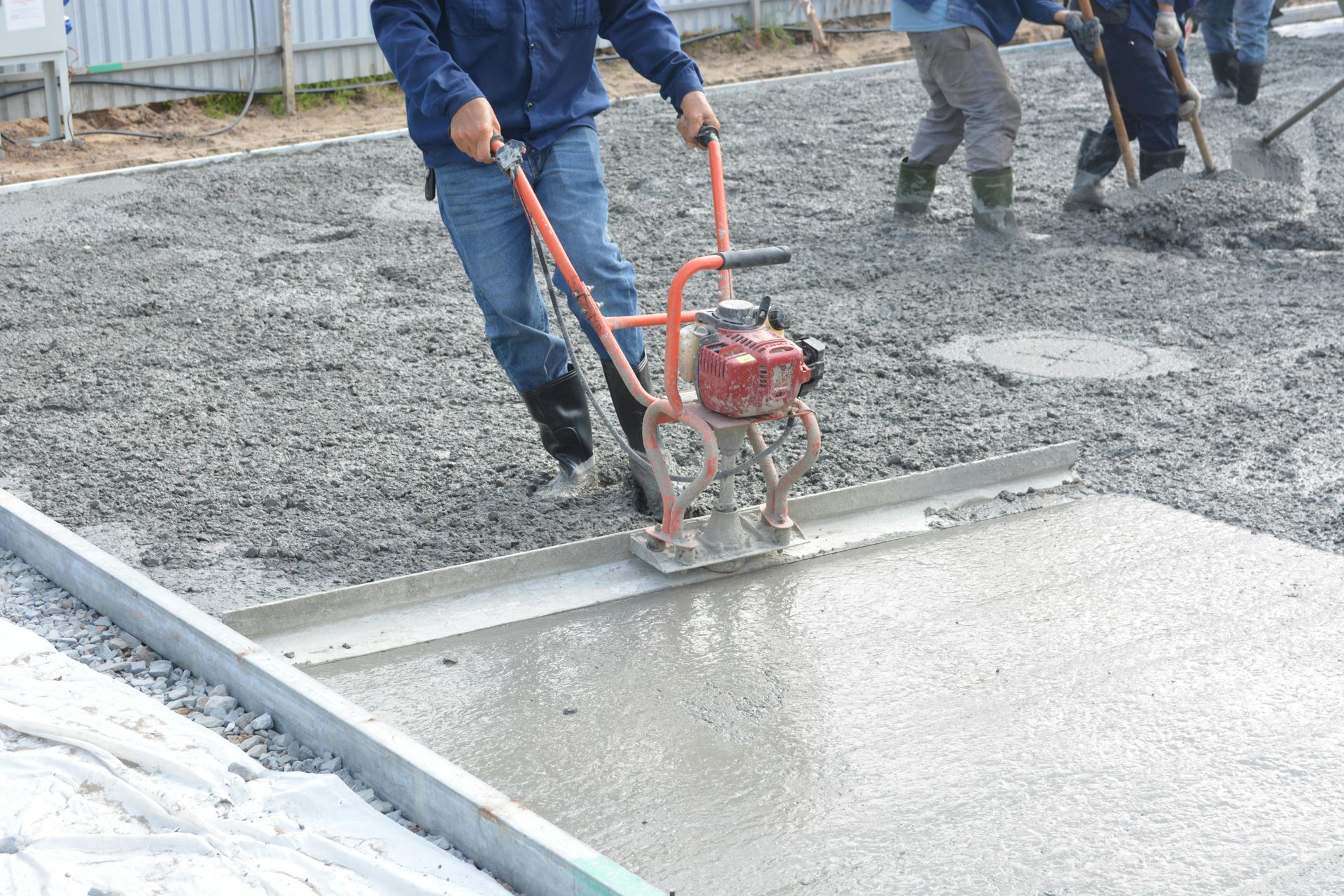

What Proper Slab Installation Requires
Base preparation determines whether your slab remains level over time or develops cracks and low spots within the first few seasons. The gravel base must be compacted in lifts to prevent voids that allow settling, and the thickness of both base and slab depends on intended load—a residential garage floor requires different specifications than a commercial equipment pad or workshop with heavy machinery.
After the concrete cures, you'll notice a smooth, level surface that drains correctly and supports weight without flexing or cracking. Blackfoot Asphalt installs slabs with proper slope for water runoff and control joints positioned to manage shrinkage cracking, so the surface remains functional through seasonal temperature swings and moisture exposure.
The installation includes forming, reinforcement placement, finishing to specified texture, and curing procedures that prevent premature surface degradation. Wire mesh or rebar placement depends on slab size and load requirements, and finishing techniques vary based on whether the surface will remain exposed or receive a coating.
What Property Owners Usually Ask
Questions about slab installation often focus on timing, preparation, and longevity concerns specific to Montana's climate and soil conditions.
What thickness does a garage slab need?
Residential garage slabs typically require four inches of concrete over a compacted gravel base, though heavier vehicles or equipment may require six-inch thickness with additional reinforcement to prevent cracking under load.
How does freeze-thaw cycling affect concrete in Florence?
Proper base drainage and air-entrained concrete prevent the moisture accumulation and surface scaling that occur when water trapped in the concrete expands during freezing, which is why base preparation and mix design matter as much as finishing technique.
When should control joints be cut?
Control joints are cut or formed within 24 hours of finishing to manage shrinkage cracking, positioned at intervals based on slab thickness and placed where cracks would be least visible or problematic.
What preparation does the site need before pouring?
The site requires excavation to proper depth, removal of organic material and loose soil, installation of compacted gravel base in lifts, and placement of reinforcement before concrete delivery arrives.
Blackfoot Asphalt works with property owners throughout Florence, Hamilton, Missoula, and Stevensville to plan slab installations that meet load requirements and site conditions. Request a consultation to review your project specifications and site preparation needs.